Low speed pre-ignition phenomenon
Today’s modern engines are designed to deliver higher levels of performance, improved fuel economy and emissions benefits than ever before. Common approaches being introduced are downsizing, turbocharging and gasoline direct injection engines.
These strategies place higher stress on the engine due to higher operating temperatures. At low speeds and high loads, the fuel-air mixture in the cylinder ignites early, resulting in a higher pressure than expected in the cylinder. This causes engine knock, reduced engine performance and in severe cases, may lead to engine damage such as broken spark plugs and cracked pistons. This phenomenon is called Low-Speed Pre-Ignition – LSPI which typically occurs when an engine is under high load at low rpm (i.e., driving slowly and then rapidly accelerating).
Contributed factors to LSPI
Unlike conventional knock, an LSPI event cannot be predicted and corrected by adjusting spark timing.
Research has pointed out that LSPI arises from interactions between lubricants, fuels, and engine design/operation. As such, mitigating pre-ignition involves altering the design of the engine or lubricant to help avoid this emerging issue.
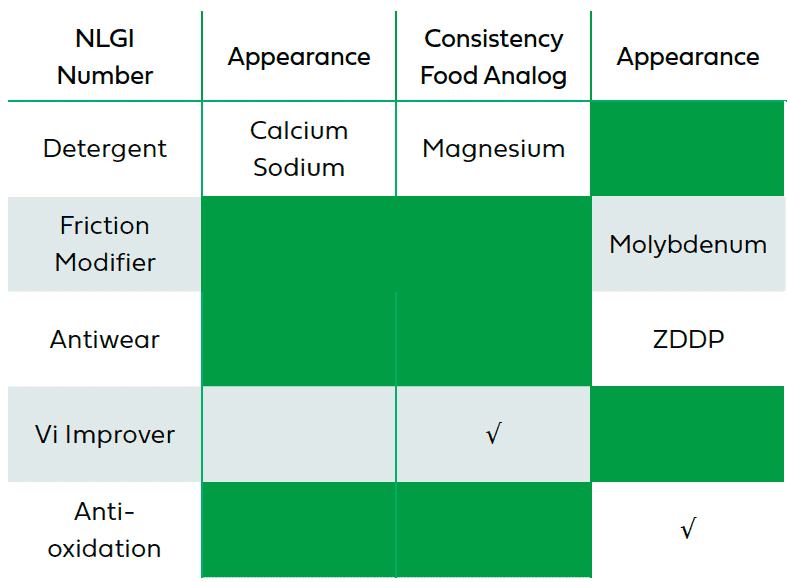
In relation to engine lubrication, there are also a number of documented analysis where they look to understand the effects of key components in a modern lubricant to LSPI. Components that have a significant impact on LSPI have been categorised as: quencher (decrease LSPI activity), promoter (increase LSPI activity), and neutral (no change in LSPI activity) are summarised in below table.
New Engine Oil Specification
In order to not only minimise the LSPI phenomenon but also provide better engine protection as well as oxidation stability and deposit control, the two latest oil specifications API SP and ILSAC GF-6 were introduced in May 2020.
There are five new engine tests introduced for API SP compared to API SN PLUS to ensure that engines requiring API SP capable engine oil are robust for the latest generation of engine hardware.
– Sequence IIIH –
Measure viscosity control (resists thickening), oil oxidation resistance and engine deposit control
– Sequence IVB –
This is a new engine test for engine wear
– Sequence VH –
A new test for engine cleanliness and sludge
– Sequence IX LSPI –
API SP requires slightly more stringent control of LSPIevents.
API SN and prior specifications do not have any testing for LSPI
– Sequence X –
A new requirement for timing chain wear protection.
ILSAC GF-6 provides low-speed pre-ignition and timing chain wear protection while improving piston cleanliness and fuel economy. This performance standard includes two separate specifications: GF-6A which is backward-compatible with the existing ILSAC viscosity grades and GF-6B will be defined for 0W-16 viscosity grade oils only.
In ASPAC, Castrol have upgraded PCO portfolio include both EDGE, MAGNATEC and GTX range to meet the latest engine oil specification since beginning of 2022.

Leave a comment
Your email address will not be published. Required fields are marked *