
What is “SAPS”?
“SA” is Sulphated Ash, “P” is for Phosphorus and “S” is for Sulphur. Sulphated Ash is the residue that blocks the Diesel Particulate Filters (DPF) when Phosphorous and Sulphur additives are burnt in the oil. Phosphorus is an anti-wear additive whereas Sulphur is an antioxidant additive, both may block the DPF.
Fun Fact
Replacing a DPF can be very expensive. A new filter from an original equipment manufacturer (OEM) can cost anywhere from USD 3,000 to USD 10,000. Besides that, the price to replace a DPF in an older or higher mileage vehicle may be higher than the vehicle itself. Therefore, it’s crucial to understand how DPFs work and perform regular maintenance.
Why do we need DPF?
DPF started getting popular in mid-2000 and low SAPS oil suddenly became important because DPFs were getting blocked by oil that was available then.
To reduce emissions from diesel vehicles, DPF captures, and store exhaust soot deposited in the filter, which prevents harmful exhaust emission and the black smoke you commonly see emitted from diesel vehicles when accelerating.
Maintaining a DPF
Key to maintaining a DPF filter is to ensure it’s able to regenerate itself when it is filled with soot, two types of generation include: Passive Regeneration – It happens when heat in the engine builds to the point where soot, carbon, is combined with oxygen to create CO2. Since CO2 is a gas, it can pass through DPF. Ash, however, cannot be converted. Eventually, ash will build up to the point where DPF must be physically removed and cleaned. Passive regeneration occurs as the vehicle is driven normally underload. It may not always keep the DPF clean over the course of the day, and that’s where active regeneration comes in.
Active Regeneration – Passive regeneration is part of normal engine operation whereas active regeneration requires the engine to act. Active regeneration takes place when the engine isn’t creating the heat it needs. For example, a truck that is not fully loaded. Once the soot reaches a certain point, the engine injects fuel in the exhaust stream, which goes over the oxidation catalyst and oxidizes the fuel to create heat. The heat is then used to convert soot to CO2. Both active and passive regeneration happen automatically and without driver input. Active regeneration can occur automatically any time the vehicle is moving.
Purpose of low SAPS engine oil
Global legislation is mandating that commercial vehicle OEMs continue to reduce exhaust emissions of NOx and particulate matter. To meet these stringent standards, OEMs rely more heavily on exhaust aftertreatment systems, such as DPF.
Despite current engine oil’s advanced additive properties, a high concentration of phosphorus and sulfur can poison the vehicle’s catalyst converter. Therefore, the European Automobile Manufacturer’s Association (ACEA) set recommendations on how much phosphorus and sulfur can be added in the engine oil.
That is where low-SAPS engine oils enter the scene.
They are also called low-ash engine oils because they have a low tendency to ash formation. These oils consist of innovative, low-emission additives. They are designed specifically for vehicles with DPFs and three-way catalytic converters (TWCs).
Due to their low ash-forming properties and the reduction of sulfur and phosphorus, low-SAPS engine oils ensure a longer engine service life. Most importantly, they enhance the efficiency of the exhaust gas purification system and reduce pollutant emissions.
The chart below shows the ACEA C service categories required for catalyst, GPF/DPF compatible engine oils for petrol and diesels or “Low SAPS”.
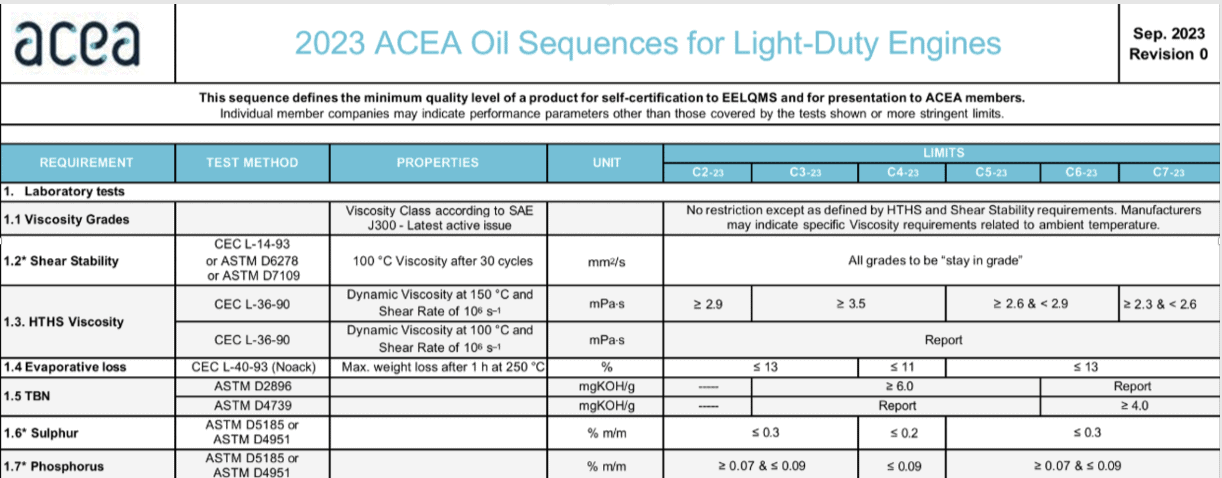
GPF = Gasoline Particulate Filter




Leave a comment
Your email address will not be published. Required fields are marked *