
What is Coolant?
The primary job of an engine coolant is to provide cooling by absorbing generated heat in engine components.
Coolants are composed of ethylene glycol (sometimes propylene glycol), purified water, performance additives and coloring dyes. Works of an engine can generate extreme heat which can catastrophic failure if it isn’t equipped with an efficient heat transfer mechanism. Heat transfer is achieved by an advanced cooling system continuously circulating coolant around the engine’s hot zones, absorbing heat and discharging it to the atmosphere via the radiator.
Coolants encounter very high surface temperatures are circulated at high velocity and are exposed to a variety of different types of metal and non-metal components. Hence there is great potential for chemical reactions and physical damage.
The second critical function of a coolant is to protect hot metal surfaces and other components from corrosion and degradation. In order to prevent engine damage and enable swift start-up, coolant must resist freezing in sub-zero temperatures, and boiling in summer heat. Two types of glycols are usually applied for engine coolants where both share similar cooling properties. Propylene glycol is categorized to be less toxic compare with ethylene glycol. While the later has better heat transfer due to its lower specific heat.
Concentrate or premix
Coolants are sold in premixed, ready-to-use form or concentrate.
Concentrated coolants should never be used undiluted as heat transfer since it will be severely compromised. Water quality is very important for corrosion protection. Only de-ionized or soft tap water should be mixed with a coolant concentrate.
Color is not an indicator of coolant performance
Early antifreeze products were often dyed green to aid leak detection.
Other colors now differentiate new technology coolant from the “conventional green” antifreeze. The color may be representative of an approved or OEM genuine product or simply a coolant manufacturer’s choice. There is no standardized color system for coolants. Never select a coolant based on its color alone.
Types of Coolant
Coolants are generally categorized by their additive technology and level of approval to OEM and other performance specifications.
There are three broad classes of engine coolant technology:
1. Conventional/Traditional – based on older technology and less expensive inorganic additives. Relatively short life due to depletion of the additives and limited stability and protection at high temperature e.g. Castrol PREMIUM COOL PLUS.
2. OAT – based on fully organic additives with very low depletion rate and deliver long service life. Very stable and offers superior corrosion protection at high temperatures and compatibility with all cooling system materials e.g. Castrol RADICOOL SF.
3. Hybrid OAT – combination of OAT type and selected inorganic additives that provide additional protection for certain component metallurgies under severe conditions. Several OEM approvals are restricted to hybrid-OAT-type technology e.g. Castrol RADICOOL NFand Castrol RADICOOL Si-OAT.
The risk of getting it wrong
Cooling system problems are one of the leading contributors of engine failure, a victim of a “set and forget” perception.
Proper coolant selection and maintenance are critical to trouble-free vehicle operation. A faulty cooling system may prevent effective warm-up of the engine, leading to poor lubrication and poor combustion control.
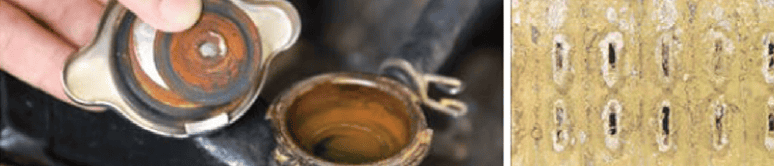
Minor cooling system corrosion generally becomes a major problem if left untreated. Problems can sometimes arise when different coolants are mixed-together. This is due to certain mineral-type additives being incompatible with each other if concentrations become unbalanced, extreme cases causing formation of solid deposits and cooling system blockage. Modern OAT type coolants tend to be much more tolerant of mixing with each other, nevertheless it is safe practice to avoid mixing different coolants together, and when replacing coolant to always fully drain and flush out the cooling system first.
Latest approved Coolant Technology
Industry standards define basic coolant performance. Most vehicle manufacturers add additional set of requirements onto the industry standards to define the higher performing coolants tailored to their engines and to enable extended warranty protection. To qualify a coolant for an approval, manufacturers must submit a sample for rigorous lab, engine and fleet tests designed by the OEM. This can take years to complete and is done at the coolant manufacturer’s expense. If it run successfully, the product then determined to fulfil all the performance and warranty requirements of the manufacturer and earns a formal OEM approval. Only advanced coolants will pass these tests. Castrol Radicool Si-OAT is one such example, carrying formal approval from MAN, Mercedes Benz, Renault and Volvo. Coolants which only claim to “meet the requirements” of an OEM standard have not passed this comprehensive testing and qualification program. This is a much weaker indicator of performance, based on the marketer’s own judgement.

Leave a comment
Your email address will not be published. Required fields are marked *