
Introduction
High performance isn’t just about making cars go faster. It’s also about ensuring they stop safely. Brake fluid is critical to safety and is possibly the most important fluid in your vehicle. There has been continuous improvement to the performance of braking systems. Modern brake fluids must adhere to strict standards and are designed to withstand high temperatures and stress
Development of Brake Fluids
Early vehicle braking systems used mechanical linkages to transfer force to the brakes. Introduced in the 1920s, hydraulic fluid was used to transmit the force, providing a significant advancement in braking performance. Early brake fluids were often based on alcohol and had a relatively low boiling point. These were replaced by glycol fluids which have a higher boiling point and better moisture resistance.
The 1960’s saw the introduction of silicone-based brake fluids. Although these fluids had the advantage of not absorbing moisture, they were not compatible with the existing glycol products and did not achieve a major share of the market. Higher performance glycol fluids were introduced in the 1990s, which provided a higher boiling point and were compatible with existing systems. Most of today’s brake fluids are combination of glycol ethers and borate esters. Advanced brake systems, such as Electronic Stability Program (ESP) has seen the introduction of low viscosity brake fluids. These fluids ensure consistent operation even at extremely low temperatures.
Key Properties of Brake Fluids
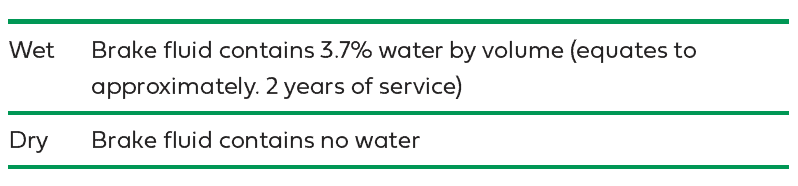
Boiling point: One of the most important properties of a brake fluid is its boiling point, described as the Equilibrium Reflux Boiling Point (ERBP). As the brake fluid is often subjected to elevated temperatures, a high boiling point is required to avoid vaporizing in the lines. Vapor is highly compressible and may prevent transfer of the braking force to the calipers. Most brake fluids are hydroscopic (will absorb water from the atmosphere), which will decrease the boiling point. To ensure the brake fluid performance with or without moisture, two boiling points are specified Wet and Dry.
Viscosity: For good brake system operation, the brake fluid must be mobile and able to respond quickly at low temperatures, as well as remaining sufficiently viscous at high temperature to maintain good lubrication. Low viscosity is particularly important for vehicles with antilock braking systems (ABS), traction control and stability control (ESP). These systems often use micro-valves which require rapid activation.
Corrosion: Brake fluids must not corrode the braking system components. Corrosion prevention is particularly important when water is present. Inhibitors are added during manufacture to ensure a high level of protection.
Seal Compatibility: The brake fluid should not have an adverse effect on the seals. A small amount of swelling of the rubber components is beneficial and provides a good seal and lubricity.
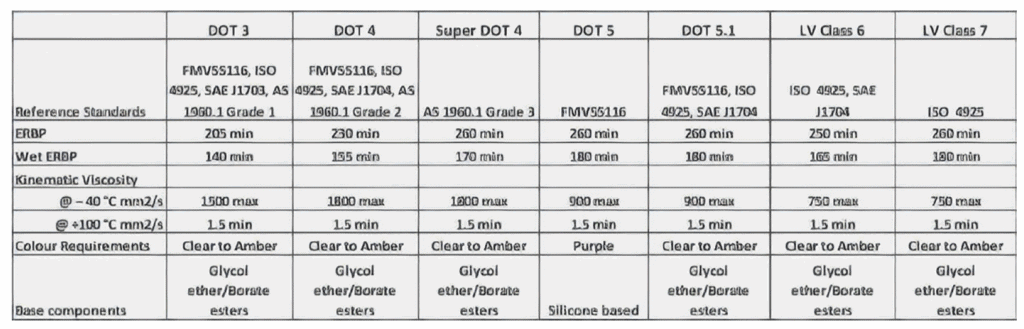
Performance Standards: Brake fluids are categorized by their components and their key properties. International standards for brake fluids are specified by several organizations including Federal Motor Vehicle Safety Standards (US Department of Transportation, DOT), International Standards Organization (ISO) and the Society of Automotive Engineers (SAE).
Table 1. Major Brake Fluid Standards
Brake fluids in electric vehicles
Unlike vehicles powered by internal combustion engines, hybrids and fully electric vehicles can regenerate their batteries using the resistance within their electric motors. In this case the brake fluid may experience less heat and stress compared to traditional vehicles. There are, however, times when engine regeneration braking is not used, (battery fully charged) and the normal braking system is used. Heavy battery packs used in electric vehicles can place an additional load on the braking system and result in higher operating temperatures. Although EV brake fluids are often the same as conventional vehicles, it is important to follow the manufacturer’s recommendations for the appropriate type of brake fluid.
References
Most manufacturers recommend a brake fluid change every 24 months, however at Castrol we suggest checking at every service.
Change It
Anything over 2.5% water content, Castrol recommend draining and changing the brake fluid. Over 3% water content and changing is essential.
Trust It
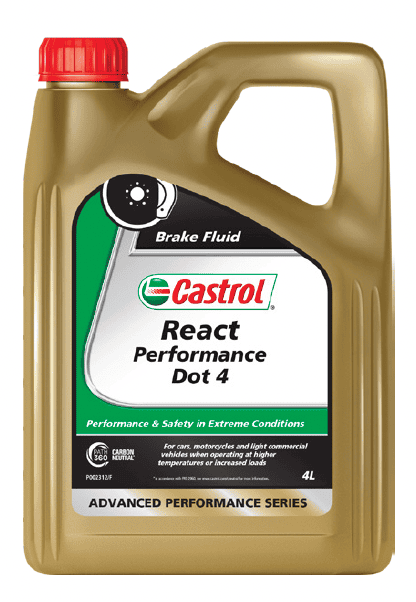
Castrol brake fluids are available in a range of formulations to suit every type of vehicle and driving situation.
Leave a comment
Your email address will not be published. Required fields are marked *